



Which crossover feels more responsive in daily traffic — 2026 Mazda CX-30 or 2026 Toyota Corolla Cross around Schaumburg, IL?
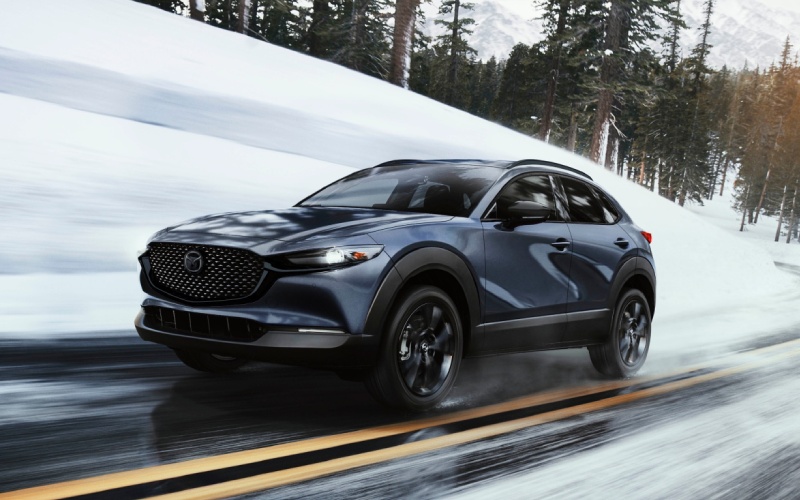
Biggers Mazda – Which crossover feels more responsive in daily traffic — 2026 Mazda CX-30 or 2026 Toyota Corolla Cross around Schaumburg, IL?
When drivers ask which small crossover responds more naturally to everyday inputs—steering, throttle, and braking—the answer usually emerges in the first few blocks. The 2026 Mazda CX-30 and the 2026 Toyota Corolla Cross approach the same job with different philosophies. Mazda emphasizes cohesion and control, while Toyota prioritizes straightforward versatility. In real-world traffic around Schaumburg, IL—think signal-to-signal sprints, lane changes near the Woodfield corridor, and ramp merges—the distinctions add up.
Responsiveness starts with steering feel. The CX-30’s tuning communicates what the front tires are doing and settles quickly after direction changes. That translates to calm tracking on the Jane Addams and an easy rhythm through neighborhood turns. Corolla Cross steering is dependable and light, yet intentionally filtered; it keeps inputs simple but doesn’t deliver the crisp on-center confidence that enthusiast drivers tend to seek. If you value a crossover that follows your hands with minimal delay, the Mazda’s approach is the right kind of transparent.
Power Delivery and Smoothness
Both lineups offer engines designed for daily drivability. The CX-30’s 2.5-liter delivers linear response, and select trims add the SKYACTIV®-G 2.5 Turbo for strong midrange punch. That reserve helps with short on-ramps and quick passing moves. Corolla Cross provides a 2.0-liter gas engine and an available hybrid configuration on certain grades, emphasizing steady, predictable acceleration. Turbo thrust is not on the Toyota’s menu, so if you like the feeling of immediate torque for decisive merges, the Mazda’s available turbo makes a difference you can feel without having to downshift aggressively.
Transmission behavior also shapes the experience. The CX-30’s automatic feels well-matched to the engine’s character, keeping shifts smooth and timely. Toyota’s gas models use a CVT calibrated to keep revs appropriate for the task at hand, while hybrid versions blend engine and electric output. Each approach has merit, but the Mazda’s snappy, consistent shift logic contributes to the natural rhythm drivers describe as more “connected.”
Traction and Confidence in Changing Conditions
Traction becomes responsiveness when weather or surfaces shift. The CX-30 makes i-Activ AWD® standard on every trim, constantly adjusting torque split to prevent slip before it happens. That proactive approach pays off during wet mornings, slushy transitions, or gravelly intersections after roadwork. Corolla Cross brings FWD on many grades and AWD availability depending on trim, with electronic on-demand AWD built into hybrid models. For drivers who want the same confident feel no matter which CX-30 they choose, the Mazda’s all-trim standardization is a practical edge.
Cabin Technology That Stays Out of the Way
Fast, intuitive tech supports responsiveness because it reduces the need to look away from the road. The CX-30 offers Wireless Apple CarPlay® and Android Auto™ and available Alexa Built-in for streamlined voice control. A Windshield-projected Active Driving Display is also available to keep key info in view. Toyota equips Corolla Cross with Toyota Audio Multimedia that supports wireless smartphone integration and a clear interface, with “Hey, Toyota” voice control in certain configurations. Both systems are capable, but Mazda’s available Head-Up Display and Alexa Built-in let you keep your chin up and eyes forward during crowded stretches, which helps the drive feel calmer and more in sync.
Parking and low-speed maneuvering deserve a nod as well. The CX-30’s available 360° View Monitor adds a top-down perspective for garages and tight lots near apartment complexes or crowded retail plazas. Corolla Cross offers Front and Rear Parking Assist with Automatic Braking on select trims, which is valuable in its own right. If you prefer to see everything in one glance, Mazda’s surround view solution is the stronger tool for confident, precise positioning.
Ride Quality and Noise
A responsive vehicle is quiet enough to preserve focus. The CX-30’s structure and suspension tuning limit harshness without feeling soft, and cabin isolation contributes to an unruffled drive at suburban speeds. Corolla Cross dials in comfort and approachability, though more road texture may come through on coarser surfaces. If you spend time crossing from neighborhood streets to higher-speed arterials, the Mazda’s calm demeanor can keep conversations easier and reduce end-of-day fatigue.
Safety Technology and Driver Assistance
Active-safety systems underpin confident reactions to the unexpected. The CX-30’s i-Activsense® suite includes Smart Brake Support, Blind Spot Monitoring, Rear Cross Traffic Alert, Vehicle Exit Warning, and available Cruising & Traffic Support. The Corolla Cross features Toyota Safety Sense™ 3.0, including a Pre-Collision System with Pedestrian Detection, Lane Tracing Assist, and Full-Speed Range Dynamic Radar Cruise Control. Both lineups are robust, yet standard Blind Spot Monitoring and Rear Cross Traffic Alert on the CX-30’s base trim are meaningful if you value consistent equipment across the range. Mazda’s available Head-Up Display further minimizes glances down during lane changes or merges.
Who Should Choose Which?
Pick the Corolla Cross if a simple, comfortable layout with straightforward controls is your primary goal and you’re satisfied with steady, predictable responses. Choose the CX-30 if your daily drives include rapid gaps in traffic, frequent lane changes, and a desire for clean, linear feedback that makes the vehicle feel like an extension of your hands and feet. Put another way, the Toyota is the practical choice; the Mazda is the driver’s choice.
- Steering feel and tracking: CX-30 communicates clearly and settles quickly; Corolla Cross stays light and easy but less detailed.
- Powertrain character: CX-30 offers an available turbo for strong midrange response; Corolla Cross focuses on steady, no-surprises acceleration.
- Visibility and low-speed control: CX-30’s available 360° View Monitor eases tight spaces; Corolla Cross offers helpful parking assist features.
Whether you commute along the I-290 interchange or thread through local routes around Schaumburg, the best way to validate these differences is a back-to-back drive on the same roads. Start with a familiar loop that includes a quick merge, a few lane changes, and a tight parking maneuver. You’ll feel the split in responsiveness immediately.
Frequently Asked Questions:
Does the CX-30 have all-wheel drive on every trim?
Yes. i-Activ AWD® is standard across the CX-30 lineup, so every configuration arrives with proactive traction control.
Can the Corolla Cross match the Mazda’s turbocharged punch?
No. Corolla Cross does not offer a turbocharged option; the CX-30 offers the SKYACTIV®-G 2.5 Turbo on select trims for stronger midrange response.
Which model has a surround view camera?
The CX-30 offers a 360° View Monitor on select trims. Corolla Cross provides parking assist technologies but not a full top-down surround view on this model line.
How do voice controls compare?
The CX-30 offers Alexa Built-in on select trims, enabling natural voice interactions for navigation, climate, and media. Corolla Cross features an available “Hey, Toyota” assistant depending on configuration; both are capable, but Mazda’s available Head-Up Display complements voice control by keeping your eyes up.
Ready to feel the difference? Biggers Mazda, serving South Elgin, Schaumburg, and Palatine, sets up test routes that mirror your daily patterns so you can evaluate steering, power delivery, and visibility where it matters most. One drive usually answers the question—responsiveness isn’t a spec sheet term, it’s the way a great crossover makes your routines feel easier and more composed.
After your test loop, ask to try the same maneuvers with the CX-30’s available Bose® audio turned down and the Head-Up Display active. Silence and glance direction can reveal which interface reduces distractions. Responsiveness is confidence—and confidence is what turns busy suburban traffic into a smoother, more predictable part of your day.
When you’re ready to compare options, our team at Biggers Mazda can align trims and features that match your priorities without adding complexity. The goal is simple: help you choose the crossover that feels right from the first turn of the wheel.
0 comment(s) so far on Which crossover feels more responsive in daily traffic — 2026 Mazda CX-30 or 2026 Toyota Corolla Cross around Schaumburg, IL?