



Which brand lowers rush-hour stress — Mazda SUVs or Honda SUVs near Schaumburg, IL
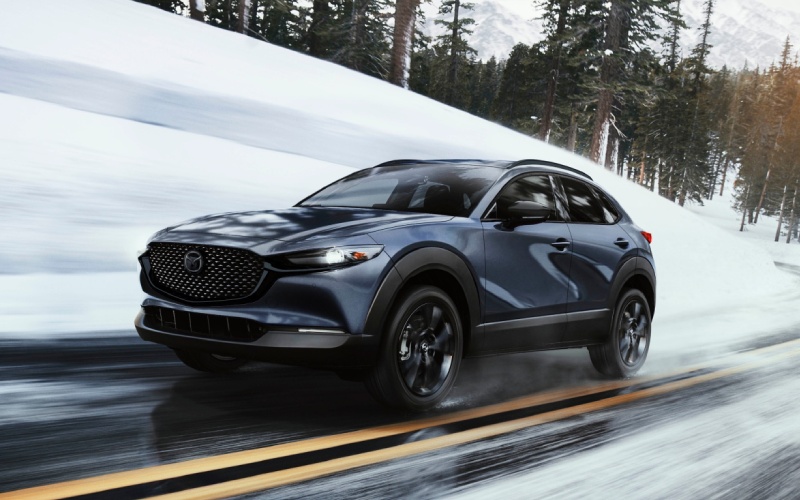
Biggers Mazda – Which brand lowers rush-hour stress — Mazda SUVs or Honda SUVs near Schaumburg, IL
Most shoppers who visit our showroom in Elgin tell us the same story—daily driving around Schaumburg is defined by I-90 merges, Golf Road traffic lights, weekend loops to Woodfield Mall, and winter mornings that start with slush. If that sounds familiar, your next SUV should do more than carry people and gear. It should keep your pulse down during stop-and-go, track straight in crosswinds, and feel calm over potholes. With that in mind, we built this comparison for commuters choosing between Mazda SUVs and Honda SUVs, focusing on real-world comfort, driver-assistance behavior, and cabin quiet on the routes you actually drive.
Honda has earned a strong following for practicality and efficiency. Mazda focuses relentlessly on human-centric engineering—how the seat supports your posture, how controls reduce distraction, and how the chassis settles the vehicle before you even feel a bump. Both lineups are appealing, but the difference shows up in the subtle, fatigue-fighting details that matter on Roselle Road at 5 p.m. or during a windy cruise past the I-290 split. Here is what to consider before you pick your daily companion.
We will reference popular models many commuters cross-shop—Mazda CX-30, CX-5, CX-50, CX-70, and CX-90 alongside Honda HR-V, CR-V, Passport, and Pilot—without narrowing the discussion to only two specific trims. The goal is to help you decide which brand’s design philosophy best matches your everyday drive near Schaumburg.
First, let’s talk seating and driving position—the foundation of a low-stress commute. Mazda engineers shape the seats to support the spine’s natural S-curve and stabilize the pelvis. That sounds technical, but the effect is simple: your head stays aligned and your shoulders relax, which minimizes small corrections and neck strain in traffic. Steering wheels in Mazda SUVs offer generous tilt-and-telescoping range, and the pedal box is positioned to keep the ankles neutral. When paired with features such as the available Active Driving Display, your eyes stay up and forward, so you remain more alert with less effort on Randall Road or Golf Road.
Honda seats provide good long-trip comfort as well, and outward visibility is a brand strength. For many drivers, the key difference emerges after an hour of stop-and-go—Mazda cabins tend to reduce fidgeting because the seat geometry, wheel angle, and head-up information work together to preserve natural posture. That holistic setup translates into what feels like extra energy when the day runs late.
Driver-assistance systems are excellent across both brands, but the tuning can change how confident you feel. Mazda i-Activsense includes technologies such as Mazda Radar Cruise Control with Stop & Go, Traffic Jam Assist on select models, Blind Spot Monitoring, Rear Cross Traffic Alert, Lane Departure Warning System, and Lane-keep Assist System. What stands out is the natural, progressive way these systems apply steering and braking. Lane-keep assist inputs in many Mazda SUVs feel gentle and stabilizing instead of springy. In slow traffic, the Stop & Go function tends to re-engage smoothly, which reduces the bobblehead effect you notice on Barrington Road ramps when congestion moves in pulses.
Honda Sensing is also comprehensive, featuring Adaptive Cruise Control with Low-Speed Follow, Lane Keeping Assist System, and (on many newer trims) Traffic Jam Assist. The suite is effective and widely available across Honda SUVs. From behind the wheel, the differences are about feel. Mazda’s calibration often aims for human-like finesse—small steering torque nudges and measured brake pressure—so the system helps in the background while you remain in command. That subtlety is one reason Mazda test drives can feel calmer on the IL-390 tollway during afternoon gusts.
Ride, noise, and vibration are another everyday differentiator. Mazda chassis tuning—supported by G-Vectoring Control Plus—works to transfer load to the front tires as you turn in, then neatly stabilizes the car as you unwind the wheel. The result on real roads is fewer mid-corner corrections and less head toss, especially over the patched pavement you encounter near the Higgins Road interchange. Many Mazda SUVs also employ targeted sound insulation, solid body sealing, and available laminated glass to lower high-frequency wind noise. The cabin quiet paired with a settled ride can make conversations easier and reduce listening fatigue on a long commute from Schaumburg to downtown Elgin.
Honda’s latest SUVs are impressively quiet as well, and suspension compliance remains a strong point. Where Mazda pulls ahead for many drivers is the feeling of unity—steering, body control, and throttle response stay in sync, so the SUV feels like one piece over expansion joints on I-90. That confidence adds up to less bracing before every bridge seam and a little more calm by the time you reach your driveway in Hoffman Estates.
Infotainment and controls matter because your hands and eyes are busy enough during rush hour. Mazda Connect is designed to reduce reach and distraction while in motion. The Commander control knob pairs with a clear screen layout, keeping key actions accessible with a few tactile clicks. Physical climate controls and a volume knob remain easy to operate with gloves—helpful after scraping ice in a Schaumburg parking lot. Smartphone integration is standard in Mazda SUVs, and available features such as Alexa Built-in on select models allow quick voice commands for navigation, calls, and smart-home tasks without hunting through menus.
Honda interfaces are straightforward and responsive, and recent models reintroduced helpful physical controls. The main difference is that many interactions remain touch-first. Mazda’s approach emphasizes tactile redundancy—knobs and a controller that reduce the need to chase small icons while the car is moving—which can translate into fewer glances away from the Jane Addams Tollway.
Winter traction is a must in the northwest suburbs, where overnight refreeze can turn neighborhood bends slick by dawn. Mazda i-Activ AWD is standard on Mazda SUVs and continuously monitors inputs—from wheel speed to outside temperature and wiper use—to predict and preempt wheel slip. The system can send torque forward or rearward proactively, so you feel steady right as you pull away from a stop sign on Weathersfield Way after a snowfall. G-Vectoring Control Plus further smooths steering transitions on low-grip surfaces by subtly managing engine torque, which helps the vehicle track predictably through an icy roundabout.
Honda’s available Real Time AWD with Intelligent Control System provides confident traction when the road turns slippery and reacts quickly to changing grip. In back-to-back drives, commuters often notice Mazda’s predictive feel—torque arrives before the front tires flare—and the way steering stays calm as the surface changes. That combination can be reassuring when merging onto I-90 from Roselle Road while lanes still carry slush between tire tracks.
If you want to test both brands like a commuter, follow a simple route and watch for stress signals—breathing, shoulders, and how often you make small steering fixes. Here is a practical loop we recommend starting from around Schaumburg.
- Begin with a cold start in an open lot: Adjust the seat and wheel, then check how quickly the defogger and heated features get the cabin comfortable.
- Head to Golf Road during moderate traffic: Evaluate stop-and-go smoothness using adaptive cruise—notice how gently the system restarts and whether the SUV creeps or brakes abruptly.
- Merge onto I-90 and set cruise at the ambient flow: Make a couple of lane changes around a semi and judge straight-line stability in crosswinds.
- Exit near Meacham Road and take a few 90-degree turns: Feel for body roll, steering precision, and whether passengers’ heads sway.
- Finish with low-speed maneuvers around Woodfield Mall: Park, back out, and re-park—note outward visibility, camera clarity, and steering effort.
After that loop, it becomes easier to match a brand to your priorities. Both lineups shine in certain areas, but commuter comfort often tips the scale toward Mazda for Schaumburg drivers who value a calmer, more natural-feeling drive.
To make the decision even clearer, consider these quick takeaways from what we hear daily on test drives near Elgin and Schaumburg.
- You want a cabin that feels premium and quiet by default: Mazda SUVs deliver upscale materials and measured road isolation that make long I-90 stretches feel shorter.
- You prefer driver assists that feel human, not robotic: i-Activsense tuning and Mazda Radar Cruise Control with Stop & Go aim for smooth, confident inputs.
- You value intuitive, eyes-up controls: Mazda Connect and the Commander control knob help you manage audio and navigation without chasing screens.
- You need all-weather poise every day: i-Activ AWD is standard on Mazda SUVs and works proactively for winter traction on local side streets.
- You prioritize maximum cargo cubbies and a touch-first interface: Honda SUVs may appeal if top-of-the-list needs are storage nooks and familiar touchscreen operations.
At Biggers Mazda, our team builds test drives around your actual commute—rush-hour timing, highway stretches, and the same city streets you use every week. That way, the differences between brands show up naturally, and the SUV that leaves you calmer by mile ten usually proves to be the right fit by mile one hundred.
Frequently Asked Questions:
Which Mazda SUVs include Traffic Jam Assist?
Traffic Jam Assist is available on select trims of models such as Mazda CX-30, CX-50, CX-70, and CX-90 when equipped with the appropriate packages. Our team can confirm availability on specific vehicles in our Elgin inventory.
Is i-Activ AWD standard on Mazda SUVs?
Yes. i-Activ AWD comes standard on Mazda SUVs, including Mazda CX-30, CX-5, CX-50, CX-70, and CX-90. That consistency makes it easy to choose the size you need without compromising on all-weather confidence for Schaumburg winters.
How does G-Vectoring Control Plus feel on real roads?
It is subtle by design. As you begin a turn, the system helps load the front tires for better response, then smooths forces as you straighten the wheel. Drivers usually describe fewer mid-corner corrections and a calmer ride over patchy pavement or during quick lane changes on I-90.
Can I set up a commuter-focused test drive from Schaumburg?
Absolutely. We will tailor a route that includes I-90 cruising, local streets like Golf Road, and low-speed parking around Woodfield Mall so you can feel how driver assists, visibility, and ride comfort compare. Visit us at 2100 N. Randall Road in Elgin, IL, or contact our sales team to schedule.
Do Mazda SUVs support voice control and smartphone integration?
Yes. Apple CarPlay and Android Auto are standard on Mazda SUVs. Select models also offer Alexa Built-in for convenient voice commands, which is especially helpful when traffic stacks up near the IL-390 interchange.
A relaxed driver is a safer, happier driver. If your daily loop runs through Schaumburg, Hoffman Estates, or Palatine, Mazda’s human-centric engineering—seat design, intuitive controls, i-Activsense, i-Activ AWD, and G-Vectoring Control Plus—works together to lower stress and raise confidence. Visit Biggers Mazda and let us help you choose the SUV that makes your everyday drive feel easier from the first green light to the last turn home.
0 comment(s) so far on Which brand lowers rush-hour stress — Mazda SUVs or Honda SUVs near Schaumburg, IL