



What’s the Difference Between the Mazda CX-3 and the Mazda CX-5?
If you’re in the market for a superb crossover SUV, two exceptional candidates are put forth in the 2016 Mazda CX-3 and the 2016 Mazda CX-5.
These two crossovers both offer impressive amenities and fuel economy at affordable prices.
Both the Mazda CX-3 and the Mazda CX-5 provide impeccable quality, so choosing which one is right for you really comes down to your individual needs and wants.
Price Points
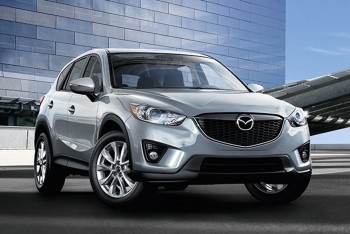 The Mazda CX-3 and the Mazda CX-5 are fairly close in price, with the Mazda CX-5 costing about $2,000 more at the base trim level and just over $3,000 more at the highest trim level. If budgetary constraints are a key concern in your vehicle buying decision, you may opt for the slightly lesser-priced Mazda CX-3.
Here is how these two models measure up pricewise:
2016 Mazda CX-3 trims and prices:
- Mazda CX-3 Sport: Price starts at $20,840
- Mazda CX-3 Touring: Price starts at $22,840
- Mazda CX-3 Grand Touring: Price starts at $25,870
2016 Mazda CX-5 trims and prices:
- Mazda CX-5 Sport: Price starts at $22,625
- Mazda CX-5 Touring: Price starts at $26,045
- Mazda CX-5 Grand Touring: Price starts at $29,050
Under the Hood
If engine power and fuel economy are high on your priority list, both the Mazda CX-3 and Mazda CX-5 are excellent choices. The Mazda CX-5 does offer more engine options and greater torque and horsepower, which may sway a driver for whom these are key considerations.
The Mazda CX-3 models are powered by a 2.0L SKYACTIV?-G four-cylinder engine, which generates 146 hp and 146 lb-ft of torque, offering class-leading fuel economy of up to 35 mpg on the highway.
This same 2.0L SKYACTIV?-G engine also powers the Mazda CX-5 Sport FWD manual transmission trim, which features variable valve timing and achieves 155 hp and 150 lb-ft of torque.
The other Mazda CX-5 models are powered by a 2.5L SKYACTIV?-G DOHC four-cylinder engine with variable valve timing, which produces 184 hp and 185 lb-ft of torque.
The Mazda CX-5 models achieve fuel economy of up to 26 mpg in the city and 35 mpg on the highway.
Roominess
The amount of cargo space you want and need can also help narrow your choice.
For those who crave space but don’t need quite as much, the Mazda CX-3’s 44.5 cubic feet with the rear seats folded is a perfect choice.
For those looking for greater cargo volume, the Mazda CX-5 offers up to 65.4 cubic feet with the rear seatback folded.
Make an In-Person Comparison
Consumers can further explore the features and assets of both the 2016 Mazda CX-3 and the 2016 Mazda CX-5 at Biggers Mazda. Come in or contact us today to take a test drive of these two prime SUVs.
0 comment(s) so far on What’s the Difference Between the Mazda CX-3 and the Mazda CX-5?